
- Data from 22 countries show high trust in experts for climate intervention governance.
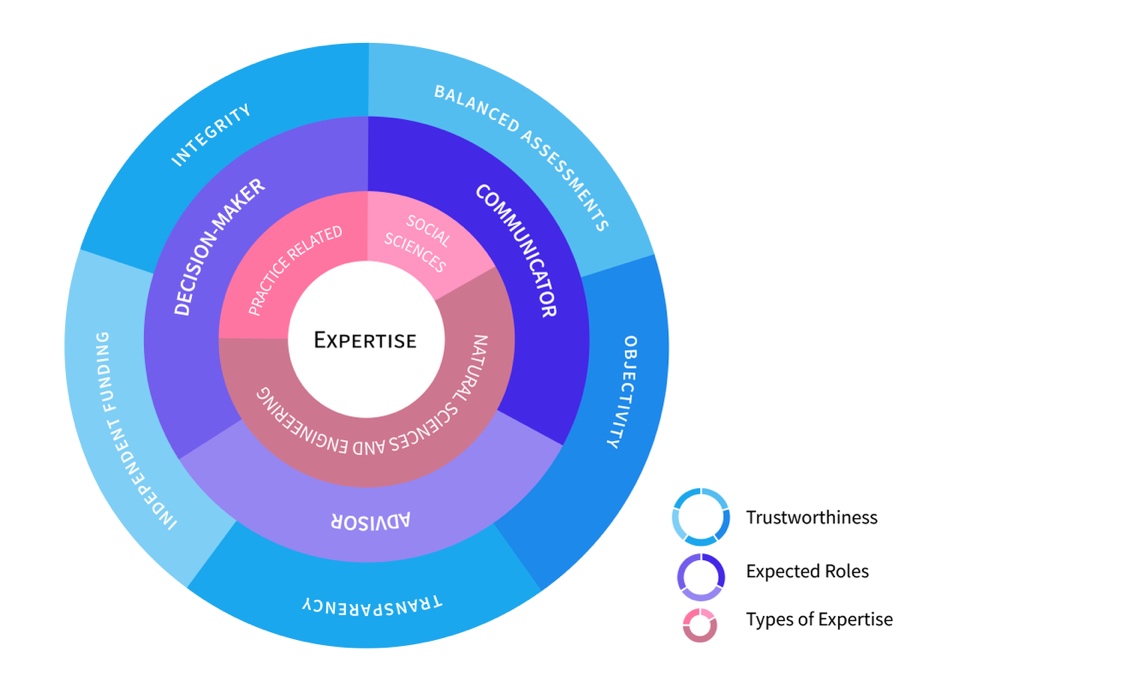
- Transparency, independent funding, objectivity, and integrity are key to trustworthiness.
- Publics see experts as communicators, advisors, and decision-makers.
- Preference for expert authority mirrors distrust in political elites in some countries.
- Diverse knowledges need to be better integrated in climate intervention governance.
As the world grapples with climate change, new technologies are emerging to remove carbon dioxide from the atmosphere and even modify solar radiation. These ideas - sometimes called climate intervention technologies - come with high uncertainties, ethical dilemmas, and major societal stakes. Who should be in charge of making decisions about these controversial technologies?
In our latest study, we explored how the public perceives the role of experts in governing climate interventions. Based on a survey of 22,222 people and 44 focus groups across 22 countries, we examined:
- Who the public sees as an expert in climate intervention technologies;
- What role they believe experts should play in decision-making;
- How trust and distrust unfolds in this context;
Here are some of the key take-aways from our research:
Publics trust scientists more than politiciansAcross all 22 countries, we found high levels of trust in scientific experts and institutions when it comes to governing climate intervention technologies. High trust in scientific experts often mirrors low levels of trust and skepticism towards political elites, especially in some of the European countries included in the study such as Austria, Germany or Poland (see Fig. 1).
People in our study expect scientists to play multiple roles - not just as researchers, but also as communicators, policy advisors and even decision-makers (see Fig. 2). These different roles have implications for how responsibilities and competences are allocated across the science-policy interface. In more than half of the countries studied, participants expressed a desire for experts to take a more active role in decision-making on matters related to carbon removal or solar radiation modification. However, trust in experts and their ability to take decisions responsibly comes with conditions: participants emphasized that trustworthy experts must be transparent, free from conflicts of interest, and committed to weighing both risks and benefits objectively.
The missing role of social scientistsDespite the complex ethical, legal, and economic questions surrounding climate intervention technologies, social scientists were rarely mentioned as key experts in our focus groups. This may reflect a broader underfunding of social sciences in climate research (Overland & Sovacool, 2020). Yet, the public's demand for balanced, multidimensional assessments indirectly suggests a need for more interdisciplinary expertise.
Social scientists also have a role to play in bridging this gap. They need to engage more actively in public and policy discussions, ensuring their insights reach a wider audience.
Expertise beyond academiaA well-rounded approach to governing climate technologies should include not only academic expertise but also practical, experience-based knowledge. Participants emphasized the value of knowledge from farmers, rural or local communities, and Indigenous groups in shaping practices for carbon removal. Their practical expertise and lived experience are crucial in designing fair and effective climate solutions.
Overall, our study highlights the strong public trust in scientists but also raises important questions about the role of social sciences and practical and place-based knowledge in climate governance. If we want just and effective climate policies, we need diverse voices and knowledge at the table—from natural and social scientists to local communities.
References
Fritz, L., Losi, L., Baum, C.M.,Low, S., Sovacool, B.K. (2025)
Environmental Science & Policy, 164